Rio Grande College
RGC Seal

Department of Natural & Behavioral Sciences
Route 3, Box 1200
Eagle Pass, Texas 78852
Phone: (830) 758-5017
Fax: (830) 758-5003
E-Mail: murbina@sulross.edu

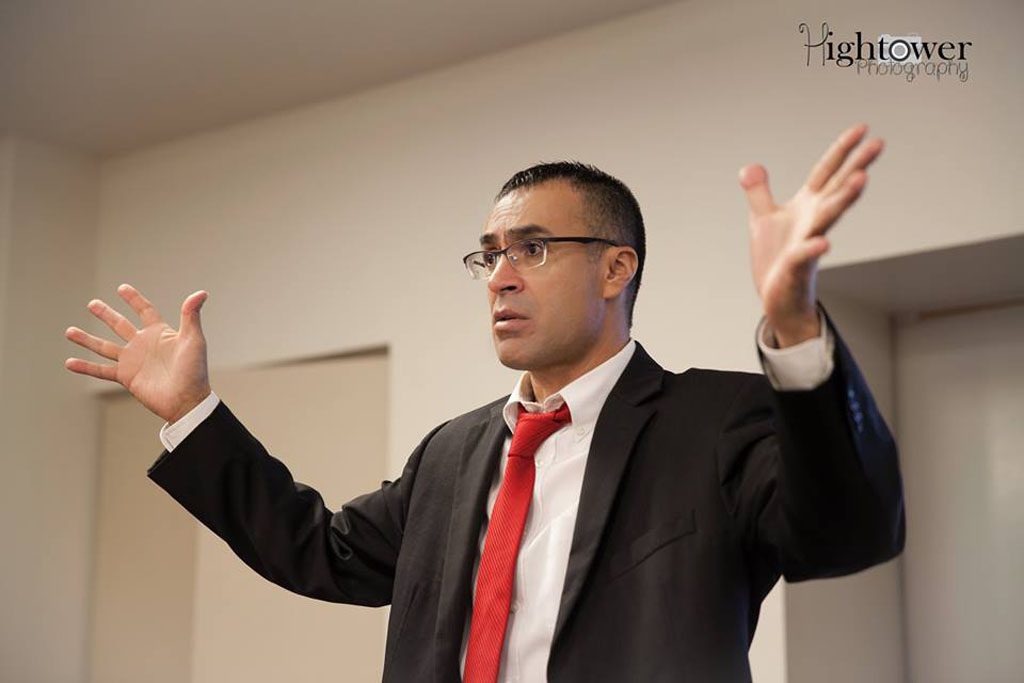
Dr. Martin Guevara Urbina

Dr. Martin UrbinaYo, Martin Guevara Urbina, orgullosamente Mexicano, nací en un petate, bajo un trono de lluvia, in San Miguel de Allende, Guanajuato, México, which is located at the foot of the mountain, to Dolores Hidalgo, Cuna de la Independencia y Libertad!

About the Student

With a low probability of success, Martin began his educational journey, first grade, in Carta Valley, Texas. With the help of various caring and loving people, Martin managed to progress in school, moving to the Ozona, Texas, public school system during his fourth grade year, later attending Rocksprings, Texas, high school, and finally graduating from Ozona High School.

Destiny, fate, the winds of luck, or understanding and compassionate people, Martin was admitted into Western Texas College in Snyder, Texas. Two years later, he relocated to Sul Ross State University in Alpine, Texas, where he was granted his first college degree, a Bachelor of Science in criminal justice. Having discovered that education, like life, has a truly beautiful side, Martin opted to pursue further studies, moving to New Mexico to attend New Mexico State University, where he received a Master of Criminal Justice. Though, his final destination, as a "student," would be Western Michigan University, where Martin graduated with a Ph.D. in sociology in 2000.

After several years of what he calls being out at sea, Martin is pleased and honored to return to the area he has always called: home! As such, Martin wishes to express his most profound gratitude and appreciation to the staff, faculty, and administration for giving him the wonderful opportunity of being part of Sul Ross State University—Rio Grande College!

About the Professor

Doctor Martin Guevara Urbina is an Associate Professor of Criminal Justice in the Department of Natural & Behavioral Sciences at Sul Ross State University—Rio Grande College. He has taught at New Mexico State University, Western Michigan University, University of Wisconsin—Milwaukee, Howard College, and Texas A&M University—Central Texas. Professor Urbina was awarded a Certificate of Recognition for Outstanding Teaching by Western Michigan University in 1999, and he was nominated for the 2002-2003 UWM Distinguished Undergraduate Teaching Award.

During the fall of 2010, Professor Urbina also started teaching (sociology) for Southwest Texas Junior College, as an adjunct instructor.

In an article, "Class Acts: Outstanding College Teachers and the Difference they Make" (2003), by Dr. James R. Acker, Distinguished Teaching Professor, University at Albany, Professor Urbina was cited as one of the leading educators in the United States: noting him a truly influential professor!

About the Author

Dr. Urbina is author/co-author of over 40 scholarly publications on a wide range of topics, including several academic books. His books include, Beyond Post-Racial America: 21st Century Dynamics of Multiculturalism (2013: forthcoming); Capital Punishment in America: Race and the Death Penalty Over Time (2012); Hispanics in the U.S. Criminal Justice System: The New American Demography (2012); Capital Punishment and Latino Offenders: Racial and Ethnic Differences in Death Sentences (2003, 2011); A Comprehensive Study of Female Offenders: Life Before, During, and After Incarceration (2008); and Kylor's Adventure Through the Rainforest: A Journey of Courage and Faith (forthcoming). In addition to working on various diverse projects for publication, Urbina is currently working on 3 new academic books: Borders and Dreams: Ethnic Realities of Mexican Americans from Colonialism to 21st Century Globalization; Juveniles in the U.S. Legal System:  Making Sense of Juvenile Justice; and Immigration and the Law: From Conquest to the War on Terrorism. Along with his academic endeavors, he is also writing two novels: An Adventure in Time: A Journey Without Boundaries (fiction) and Mi Vida: Between the Wind and the Rain, I looked up and Wept (nonfiction). His work has been published in national and international academic journals, to include Justice Quarterly; Social Justice: A Journal of Crime, Conflict & World Order; and Critical Criminology: An International Journal. Most recently, he opted to venture into the world of poetry, with the illusion of writing a book of poems: Cincuenta Poemas de Amor Para el Alma y el Corazón: Fifty Love Poems for the Soul and the Heart. In effect, all 50 poems have been selected from over 150 written poems, and once the poems are translated from Spanish to English, the book will be submitted to a publishing house. On his spare time, Urbina loves evening walks. His biggest delight: la lluvia (rain)!

About the Researcher

Law Professor David V. Baker has referenced Urbina's work as "research of the highest caliber." Professor Adalberto Aguirre, a sociologist at the University of California—Riverside, has cited Urbina's work as "cutting-edged research." For instance, Urbina's death penalty book, Capital Punishment and Latino Offenders (2003, 2011), was quoted by the Harvard Journal of Hispanic Policy as: "Capital Punishment and Latino Offenders is unquestionably valuable to policymakers … the book is an indispensable read." Professor Baker writes: "I have just finished reading Capital Punishment and Latino Offenders . . . excellent scholarship!" More recently, Criminal Justice Review quoted Urbina's death penalty book as "compelling."

Professor Donna M. Bishop ( Northeastern University) referenced Urbina's 2004 co-authored publication in Justice Quarterly as "a very solid contribution to the literature." More recently, Rutgers University Press released an edited volume by Professor Mary Bosworth of Oxford University. The book (Race, Gender, and Punishment: From Colonialism to the War on Terror), which contains a chapter by Dr. Urbina, was quoted by Professor Susan L. Miller (University of Delaware) as "A superb book on the treatment of race, gender and punishment," and Claire Renzetti of the University of Dayton notes: "This volume stands as first-rate evidence that the sociological imagination is alive and well."

A 2007 publication by Urbina, which appeared in Critical Criminology: An International Journal, has been quoted by Professor Paul Leighton, a critical criminologist at Eastern Michigan University, as "one of the most significant contributions to the field of knowledge," citing the manuscript as a future "standard citation" in criminal justice literature.

His book on women offenders, A Comprehensive Study of Female Offenders: Life Before, During, and After Incarceration (2008), was quoted as:

"Martin Guevara Urbina provides a comprehensive examination of the plight of women prisoners – the fastest growing group of U.S. jail and prison inmates. Drawing upon self-report research conducted in Wisconsin prisons, this book provides an in-depth account of women's lives on the street, behind bars, and perceptions about their prospects for the future. Urbina disentangles the complicated relationships between a punitive criminal justice system and race, class, and gender. Altogether, this well-written and researched book sheds considerable light on a prison population that is often considered invisible and forgotten.  This book will appeal to students of criminology and criminal justice, as well as those interested in better understanding how poor and disadvantaged women become caught up in economic, political, cultural, and social forces beyond their control."

—Rick Ruddell, Law Foundation of Saskatchewan Chair in Police Studies
Department of Justice Studies
University of Regina (Canada)

Urbina’s new book on capital punishment, Capital Punishment in America:  Race and the Death Penalty Over Time (2012), was recently quoted as:

"Death penalty literature has been copious over the past half century.  Yet Urbina offers a major new perspective on the issue, assessing the role of the Latino/a community in death penalty decisions and in major crime involvement generally.  Among most scholars, it is a settled matter that death penalty decisions are disproportionately more frequent for African Americans and now, as demonstrated convincingly here, Latinos.  But why?  Death penalty advocates argue enthusiastically that disproportionality occurs because certain races unequally commit crimes for which the death penalty exists.  This misses critical facts, argues Urbina.  Urbina provides extensive statistical, referential, and descriptive evidence to buttress his thesis."

—December 2012 issue of CHOICE

About the Speaker

Professor Urbina is a frequent presenter at national and international professional conferences, where he speaks on various diverse issues, like social inequalities, law and society, social justice, the globalization of knowledge, and abstract concepts, such as time.

Finally, in a 2008 publication by Professor Matthew B. Robinson (Death Nation: The Experts Explain American Capital Punishment), Urbina was recognized as a nationally leading authority in the area of capital punishment.

A Thought

"Success usually comes to those who are too busy to be looking for it."

—Henry David Thoreau (1817-1862)

". . . the very essence of human existence, knowledge, as the mind is an element that enables us to shift the winds of luck, reshape the forces of fate or destiny, and, ultimately, empower us to become free authors of our own lives, for the true art of human expression is the ability to express our dreams, thoughts, and emotions as we feel them or as they come to mind, as we search for universal equality, justice, peace, love, truth, and reality."

—Martin Guevara Urbina in "The Dynamics of Education and Globalization in the New Millennium" (2012)